
AI Chatbots vs Human Front Desk: Who Wins Patients in 2026?
Summarise this post with:
Speed wins the first reply. Trust wins the booking.
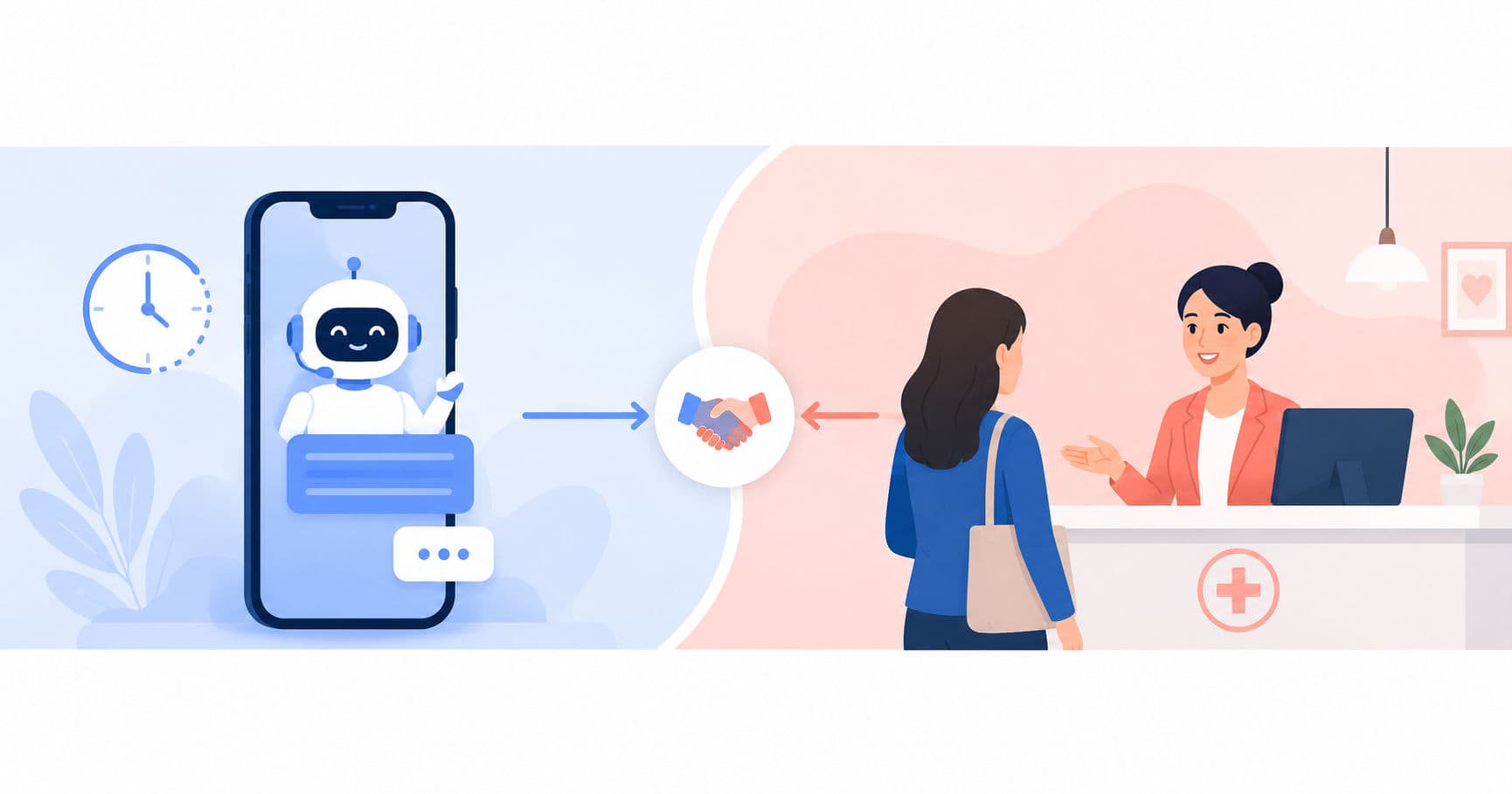
AI chatbots answer patient questions fast, any hour of the day. That is why they win the first message. Trained front desk staff still win on emotional, complex, or price sensitive questions. The fastest growing clinics in 2026 use chatbots for speed and humans for trust, joined by one clear handoff.
Key Takeaways (TL;DR)
● Chatbots win on speed and availability, often replying in seconds, any hour of the day.
● Human staff still convert better on emotional, complex, or pricing sensitive conversations.
● The best performing clinics in 2026 use both together, not one instead of the other.
● A visible, easy handoff to a real person matters more than how advanced the chatbot sounds.

Chatbots win the first message. Front desk staff win the booking.
Where Chatbots Win the First Message
Think of simple questions. Clinic timings. Location. Whether you offer a service. A chatbot answers these in seconds. It works any time of day. It never gets tired.
2026 data backs this up. 62% of people now prefer a bot over waiting for a human agent. Chatbots also reply up to three times faster than older systems. Speed matters most late at night.
A patient often messages at 11pm or 6am. That patient tends to book with whoever replies first the next morning. A quick auto reply keeps them engaged. It stops them from moving to another clinic's inbox.
Where Human Front Desk Staff Still Win the Booking
Some questions turn personal fast. Pain. Anxiety. A sensitive condition. Here, patients want a real person. A trained staff member can read tone. They can offer comfort. They can guide a nervous patient toward booking in a way no script can match yet.
This is not a small edge case. 43% of multi provider clinics now use AI chat tools for scheduling and triage. But the calls that decide if a nervous patient books are still handled by humans, in almost every one of these clinics.
“Patients do not resent chatbots. They resent chatbots with no way out to a real person.”
Should a Clinic Choose Chatbots or Human Staff?
Neither wins alone. The clinics performing best in 2026 use both, in a clear sequence. They match the tool to the moment, not to personal preference. Here is how that sequence usually looks:
Situation | Best Handled By |
Timings, location, pricing basics | Chatbot, instantly |
First message outside working hours | Chatbot, then human follow up next morning |
Anxious or sensitive patient questions | Human staff, as soon as possible |
Appointment confirmations and reminders | Chatbot automation |
What Makes This Combination Work in 2026
Most clinics miss one simple detail. Make the human handoff easy to find. Add a “talk to our team” button inside the chatbot flow. This tells the patient a real person is always one tap away.
This one design choice removes most of the resistance patients feel toward bots. It does not need a smarter chatbot. It needs one visible door back to a human. Put that door where a nervous patient can find it fast.
Clinics that added AI scheduling in 2026 recovered close to 30% of front desk admin time, per healthcare automation research. That time now goes toward calls that need real judgment. Think of a distressed patient or a tricky referral.
Frequently Asked Questions
Can a chatbot fully replace front desk staff?
No. Clinics that tried a full swap saw patient satisfaction drop fast. A chatbot works best as a first layer. It should not replace trained staff.
Do patients trust chatbot answers for medical questions?
Only for basic logistics, like hours or location. Any question about symptoms or treatment should go straight to a qualified staff member or doctor. Never leave that to a chatbot script.
How long does it take to set up a clinic chatbot in 2026?
A simple, well scoped bot can go live in a few days. The setup is the easy part. The real work is building a clear handoff, so patients always know a human is one tap away.
Does response speed really affect whether a patient books?
Yes. Patients who message outside office hours tend to book with whoever answers first the next morning. Even an automated reply keeps them engaged, until a staff member can step in.
Want to see where your clinic is losing patients before they reach your front desk? Run a free Clinic Growth Audit at audit.growclinic.io. You get a scored breakdown in minutes.
Sources: This piece uses 2026 chatbot adoption and response time data from Heyy.io's healthcare chatbot guide, plus wider trend coverage from DeepIntent's 2026 healthcare marketing trends deep dive.
Does your clinic have a clear, visible way for patients to reach a human when the chatbot cannot help? Drop a comment below and tell us how your front desk handles it. We read every reply.
Follow GrowClinic: Instagram | LinkedIn | Facebook | YouTube


